
Thinking of Eating Street Food in Vietnam? Read This First!

Updated: 5 days ago

If you're coming to Vietnam, I already know one thing you're probably excited about:
FOOOOOOOD
And as a Vietnamese person and Vietnamese teacher, I get asked this question all the time:
“Is it safe to eat street food in Vietnam?”
My answer?
Yes! But don't just eat anywhere.
I've eaten Vietnamese street food my whole life, and honestly, some of the best food in Vietnam comes from a tiny street stall with a few plastic chairs, not a fancy restaurant.
Here are some things I personally look for when I eat out:
1. Look at where the locals are eating.

If you see a small stall packed with Vietnamese people, that's usually a very good sign.
We don't always choose a restaurant because it looks pretty. We choose it because the food is good!
Of course, a busy restaurant isn't a guarantee of food safety, but high customer turnover can be a good sign that the food isn't sitting around for too long. COMMON SENSE!
2. Food containers can be a hidden risk.

Vendors in Vietnam often pack food in plastic bags. Even hot foods like soup, phở, and rice porridge may be put directly into plastic bags, especially when you order food to take away. It might look unusual to foreigners, but it’s actually very common in Vietnam.
However, there are also downsides: single-use plastic creates a lot of waste, and not all plastic bags are designed for hot or oily food. For food safety, it’s best to choose vendors who use clean, food-grade bags and avoid bags that look reused, dirty, or damaged. When in doubt, bring your own reusable container!
3. Be a little careful with raw vegetables and herbs.
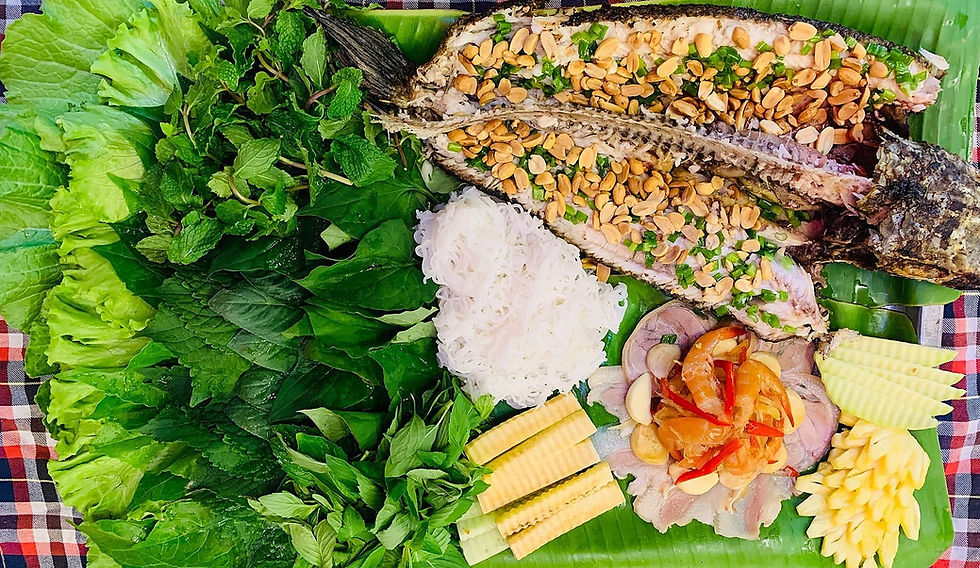
Vietnamese food often comes with LOTS of fresh herbs and vegetables and honestly, that’s one of the secrets that makes Vietnamese food so delicious and healthy!
You’ll probably notice that you don’t see as many overweight people in Vietnam, right?
But there’s a little catch. If the herbs and vegetables aren’t washed properly, they can sometimes cause stomach problems. Dust, bacteria, insects, parasites or contaminated water can all be hiding in those innocent-looking little leaves.
My advice: You don’t have to attack every single herb on your plate on day one.
Start slowly, see how your stomach reacts, and choose restaurants or vendors that look clean and hygienic.
4. Drink safe water.

FACT: Tap water is not suitable for drinking in Vietnam.
If you're visiting Vietnam, I recommend drinking bottled or properly treated water.
Bottled water is an easy option if you want to play it safe. Just make sure the bottle is properly sealed before opening it.
A regular bottle of water only costs around 50 cents.
5. What about ice?

Don't panic when you see Vietnamese people putting ice in everything. Well, the main reason is VIETNAM IS HOT AS H*LL.
The thing is, some street vendors may use ice made from untreated or questionable water, which can sometimes upset your stomach. So if you’re not sure about a particular place, just order your drink without ice. In my opinion, a drink without ice in vietnam is like a pizza without pineapple.
6. Look at the overall cleanliness.

I'm not expecting a street food stall to look like a five-star hotel.
That's not realistic. Clean doesn't have to mean fancy.
But I do pay attention to how food is handled, whether cooking surfaces look reasonably clean, and whether raw and cooked ingredients are kept appropriately.
And here’s another very scientific tip: Take a look at the cook’s face and trust your instincts!
Ask yourself: Do they look suspicious? Do they look like they’re about to serve you something questionable? Do they look like they’re hiding something?
Okay, obviously, you can’t judge food safety by someone’s face! But pay attention to the overall vibe. If the vendor looks clean, the cooking area looks reasonably hygienic, and there are lots of local customers eating there, that’s usually a better sign.
7. Be careful with "mắm tôm"

"Mắm tôm" is a strong, fermented shrimp paste that’s a beloved part of Vietnamese cuisine but it’s not for everyone.
Because it’s a fermented product and is often served without further cooking, food hygiene and proper fermentation matter. If you have a sensitive stomach or aren’t used to fermented foods, it may be better to try a small amount first.
I personally experienced mild food poisoning after eating mắm tôm with bún riêu a decade ago.
So, if you're trying dishes like canh bún or bún riêu that come with mắm tôm, play it safe and be extra careful. Make sure the restaurant looks clean, the food is served hot, and the mắm tôm is fresh and properly handled. Avoid mắm tôm that looks or smells unusually off.
8. Be careful with bánh mì chả cá.

Okay, this one is personal.
I once had terrible food poisoning after eating the fish cake (chả cá) in a bánh mì. I hated to make that noise in the toilet.
So if you're trying bánh mì chả cá, I recommend buying it from a clean, reputable, and busy place rather than choosing a random vendor where the ingredients don't look properly stored.
One bad experience doesn't mean bánh mì chả cá is unsafe. It just taught me to be more careful about where I buy it.
9. Be extra careful with seafood.

Vietnam has many beaches stretching across the country, so the seafood is delicious, fresh and very popular.
If you have a sensitive stomach like I do, you may want to be especially careful.
Personally, seafood can sometimes give me a stomachache, so I prefer busy restaurants with good food turnover and properly cooked dishes.
And please don't order raw seafood from a random roadside stall just because someone on TikTok said:
“You HAVE to try this!”
If you're not used to eating raw seafood, skip raw octopus, raw fish, clam and similar dishes unless you're confident about the restaurant and how the food has been handled.
10. Pay attention to shared utensils.

Here's a small thing that visitors sometimes don't notice.
At Vietnamese restaurants, you'll often see shared chopsticks, spoons, sauces, and other condiments on the table.
Before eating, take a quick look at the utensils and table.
If something doesn't look clean, ask for a fresh set.
It's completely normal.
Don't be shy!
I hope these tips and little warnings help you enjoy Vietnamese food safely and to the fullest!
Some people even say Vietnamese food is better than s3x.
But for me, Vietnamese food is at its absolute best when you eat it in Vietnam
SO, COME TO VIETNAM HUNGRY!
Tommy | Sticker Teacher Vietnamese Teacher & Vietnam Travel Lover
Learn Vietnamese at Explorevietnam.ca


Comments